
- Train on the firm's own documents. Copilot earned trust at DBFL when people tested it on real submittals, specifications and tender packs.
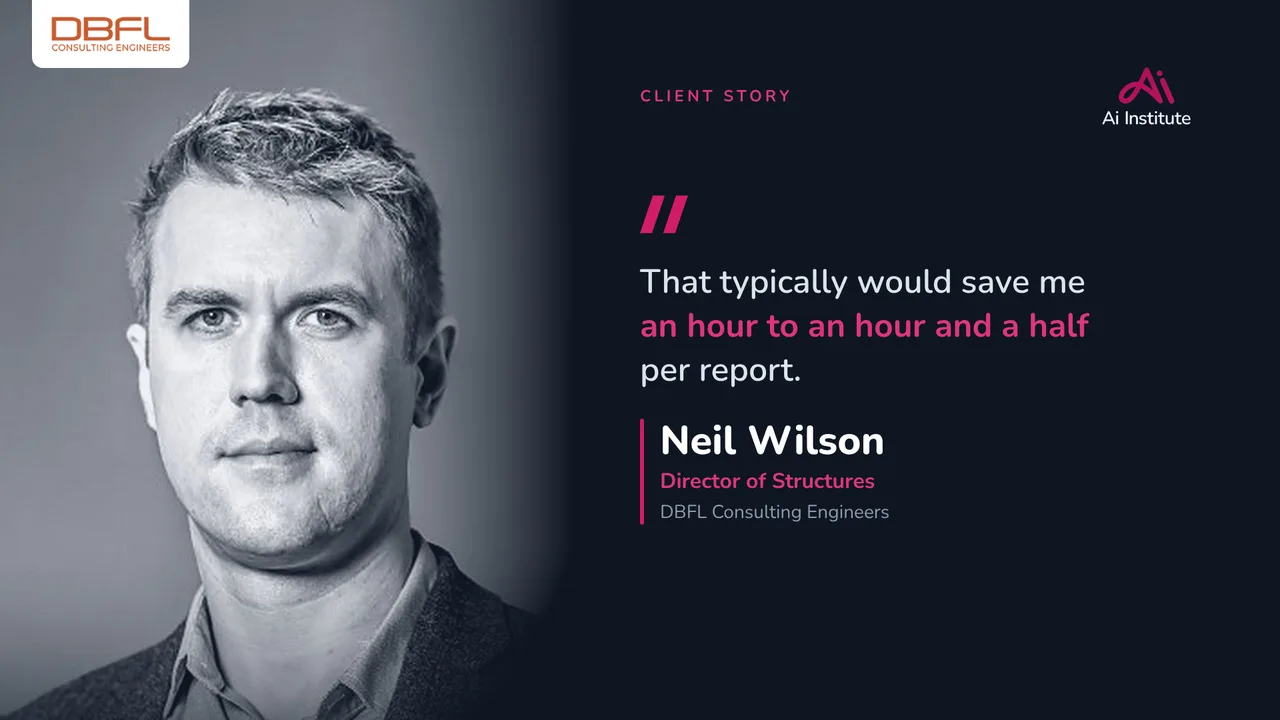
- Give senior people time back and they spend it on their teams. Hours saved on review and drafting went to mentoring graduates, QA and client contact.
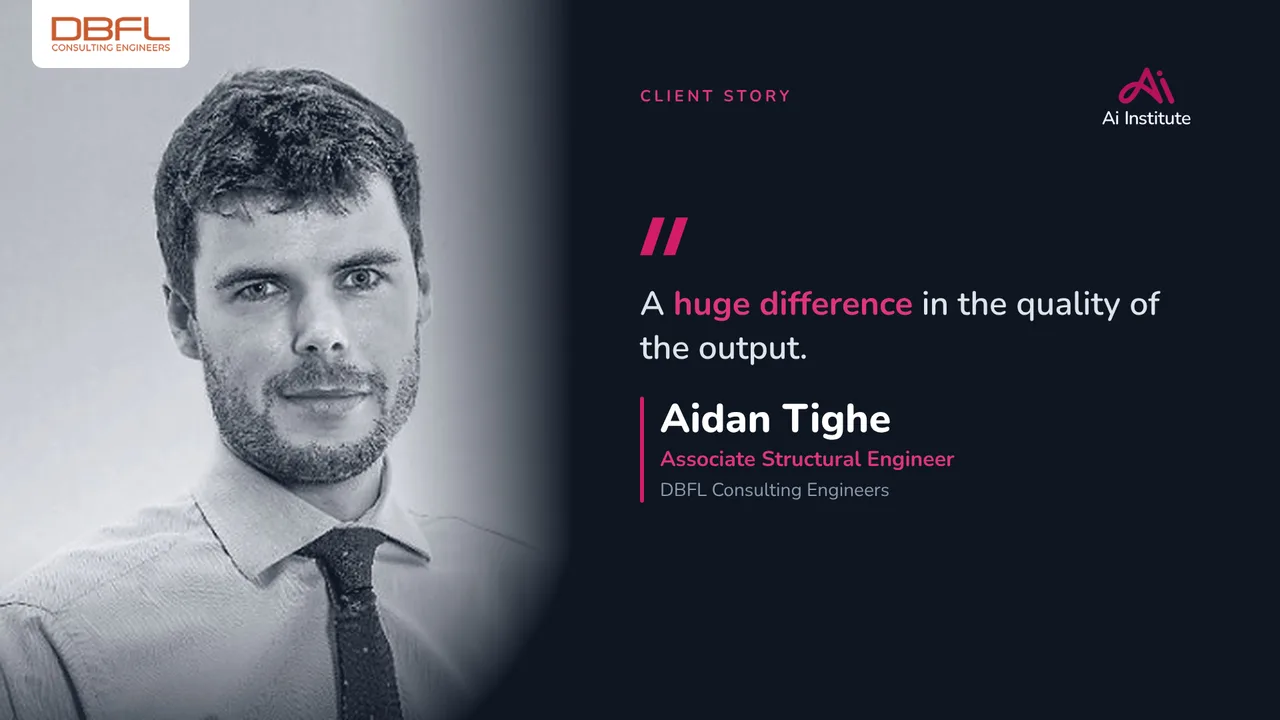
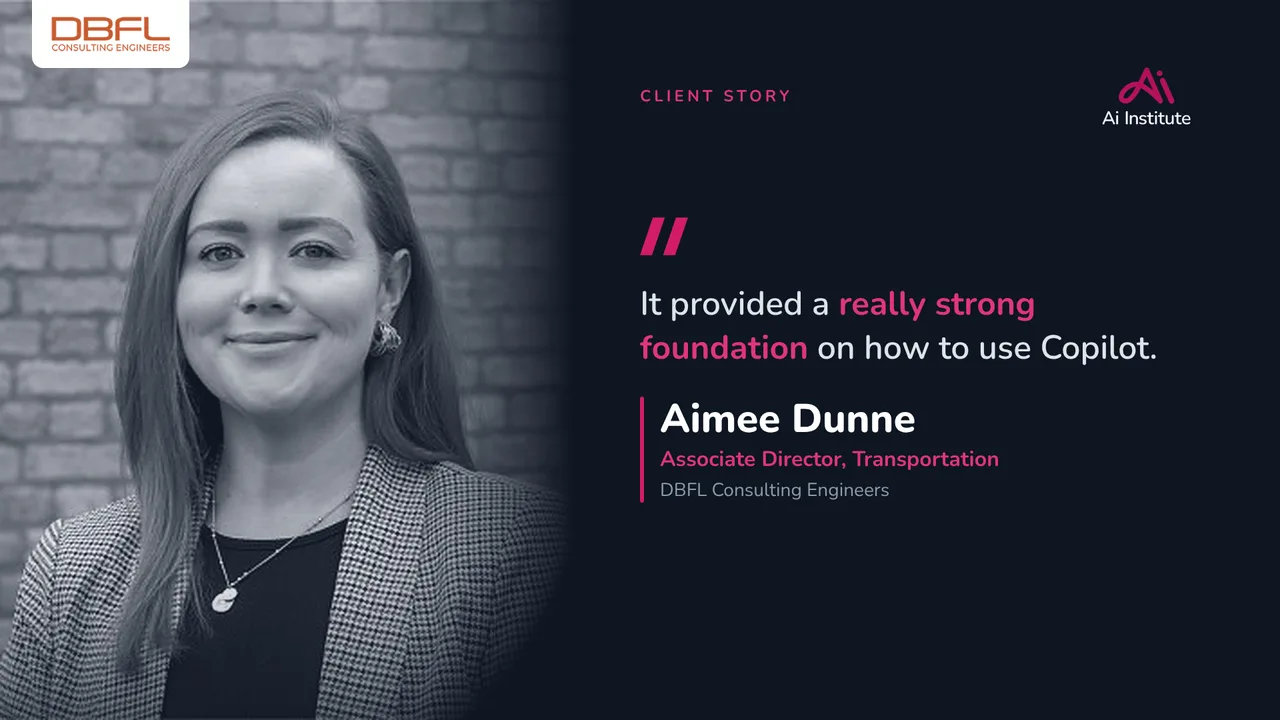
- Behaviour change is the outcome that counts. A Technical Director who had never used Copilot now uses it frequently, and an Associate Director asks of every task how Copilot can help.
Senior engineers who now reach for Copilot first
DBFL designs civil, structural and transportation schemes across property, infrastructure, transportation, environmental and energy sectors. Its directors and associates carry the review load behind all of it: reports, drawings, submittals, tender packs and the correspondence around them. Before the programme Copilot use was patchy. Some people leaned on it every day and others had never opened it. Half of the first cohort raised the same concern, that AI output would be accepted without the experience to challenge it.
We measure a programme by what people do differently afterwards, never by attendance. Across three cohorts in 2026, 32 people answered the post-training survey and the change shows in their own words. A Technical Director who had never used Copilot now uses it frequently for email search, standards lookups and first drafts. An associate in civils who had not touched it saves five to six hours a week and puts that time into training graduates. People in structures, civils, transportation, finance and HR have built agents for their own recurring work.
Licences pay back only when habits change
Microsoft lists its Copilot Business add-on in Ireland at €21.84 per user each month before VAT on monthly billing, on top of the Microsoft 365 plan. That is about €262 a year for each seat, and it returns nothing until people use it on real work. In Gartner's 2025 Microsoft 365 and Copilot Survey, 40% of 187 IT leaders said their organisation was piloting Copilot, 5% said they had finished pilots and were moving to a larger deployment, and Gartner described impact, value and ROI measurements as elusive.
For an engineering consultancy the bigger cost sits in senior hours. One DBFL Associate Director, asked before the programme about project administration and reviewing the team's technical and report writing work, answered: 'Takes half my work week'.
Senior people stretched across review, bids and correspondence
The pre-training surveys told a consistent story. DBFL's directors and associates create most value in design oversight, client relationships and mentoring. Too much of their week went on getting through documents.
Copilot training built on DBFL's own project documents
Each cohort started with Copilot basics and moved quickly to DBFL's engineering workflows. The AI Institute built the exercises from material DBFL supplied, including a tender pack, a planning pack and civil and structural submittal examples, so people tested Copilot against documents they already knew. Taught sessions alternated with applied practice workshops and homework. Two follow-on masterclasses, in June and September, went further into Notebooks, Agents and Copilot Studio.
Human in the loop thinking was taught from week one. Copilot structures the review and the engineer signs off. For the second masterclass we built a civil material submittal review agent as a worked example. It checks a submittal against DBFL's own civil specification first, then against the public governing standards, with a confirmation step between the two passes.
From never used to asking Copilot first
Progress was uneven. A few respondents were still at an early stage at survey time, some could not yet put a number on time saved, and several found Copilot weak at reading drawings. The first cohort's request for more worked examples went straight into the Champions masterclass.
Standardise what works, then widen it
The post-training surveys set the agenda. People want agents and notebooks standardised across teams so that a submittal review follows the same steps whoever runs it. Finance and admin staff asked for examples from their own work alongside the engineering ones. Engineers want to go further into drawing checks and CAD, where current tools are weakest. Several asked for Copilot to reach colleagues who do not yet have a licence.
DBFL now has Champions in place, working agents in several departments and senior people coaching their own teams. That is capability that compounds after the AI Institute leaves.
Want the same shift for your team?
The AI Institute builds AI training around your firm's real workflows, tools and data. Book an AI diagnostic: a 30 minute call to find where your firm is losing time and how AI can recover it. Brief report included. No obligation.
Book an AI diagnostic
