
AI in Retail: How Galvia Helps Retailers Use Data
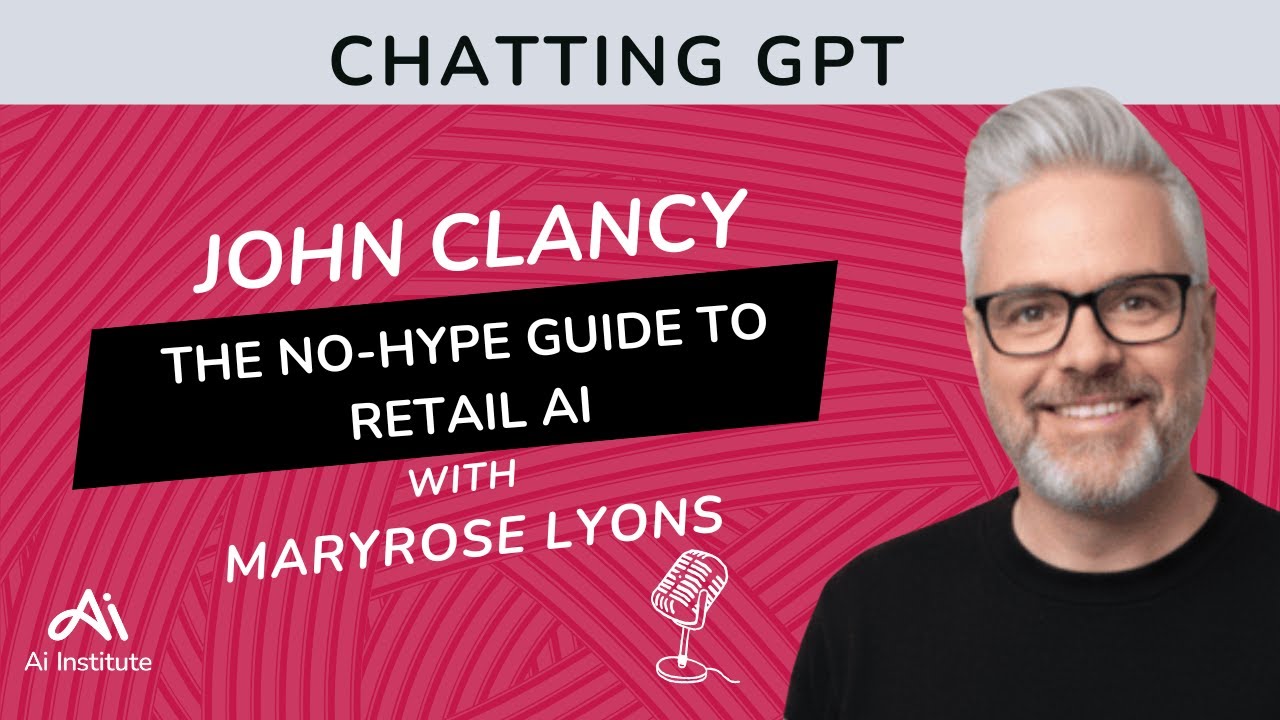
AI in Retail: How Irish AI Company Galvia Is Transforming the Way Retailers Use Data
Artificial intelligence is reshaping the retail landscape at an unprecedented pace. From personalised recommendations to predictive inventory management, AI tools are helping retailers of all sizes compete more effectively. In a recent episode of the Chatting GPT podcast, Maryrose Lyons, founder of AI Institute, sat down with John Clancy, CEO of Galvia, to discuss how his Galway and Manchester-based company is revolutionising how medium-sized retailers harness the power of machine learning and generative AI.
The Challenge of Fragmented Data in Retail
One of the most significant hurdles facing retailers today is data fragmentation. Most medium-sized retailers operate multiple systems that rarely communicate effectively: EPOS systems at the till, e-commerce platforms like Shopify, loyalty programmes, CRM databases, and email marketing tools such as Klaviyo. Each system holds valuable insights, but without unification, the complete picture of customer behaviour remains elusive.
John Clancy describes this challenge vividly: "For every success story we hear about in Ireland, there are probably ten companies that have failed because they couldn't get the investment or the support they needed." This observation extends beyond startups to established retailers struggling to make sense of their data.
Galvia's approach addresses this problem head-on. Rather than requiring retailers to rip out and replace their existing technology stack, Galvia's platform acts as intelligent middleware — what Clancy calls "AI plumbing" — that sits on top of current systems and creates a unified, predictive view of sales, inventory, and customer behaviour.
From Reactive to Predictive Retailing
The transformation from reactive to predictive retailing represents a fundamental shift in how businesses operate. Traditional retail management relies on historical reports and gut instinct. AI-enabled retailing, by contrast, uses machine learning algorithms to identify patterns and predict future outcomes with remarkable accuracy.
Clancy shares a compelling example from a Manchester-based outdoor living retailer. Through AI-driven basket analysis, the retailer discovered that only 1% of café visitors were spending money in-store — a hidden pattern that traditional reporting had missed. Armed with this insight, the retailer implemented targeted upselling strategies that added hundreds of thousands to the bottom line.
This kind of insight demonstrates why AI is no longer the preserve of retail giants. Medium-sized retailers can now access sophisticated analytics that were previously available only to enterprises with massive data science teams.
Generative AI: Democratising Data Insights
While machine learning powers the predictive engine, generative AI is democratising access to insights. Galvia's platform enables store managers to ask questions in natural language: "What were my top-performing products last month?" or "How does this store's revenue compare to others in the region?" The AI interprets these queries and returns relevant, actionable answers.
This natural language interface is transformative. It eliminates the need for technical expertise or reliance on IT departments to generate reports. Store managers can explore data intuitively, sharing insights about what's working in real time across the organisation.
As Clancy notes, "Generative AI is making it possible for everyone in the organisation to benefit from data-driven insights, not just the analysts and data scientists."
Practical Steps for Retailers Beginning Their AI Journey
For retailers considering AI adoption, Clancy offers practical advice. The first priority is connecting existing data sources. Before investing in new technology, retailers should audit what data they already have and how it can be unified. Loyalty schemes, EPOS data, e-commerce platforms, and CRM systems all contain valuable insights waiting to be unlocked.
The second priority is building AI literacy across all staff levels, not just leadership. When store managers understand what AI can do — and what it cannot — they become active participants in the transformation rather than passive recipients of change.
Finally, retailers should start with specific, measurable use cases. Whether it's predicting stock requirements for the upcoming season or identifying which customers are most likely to respond to a promotion, focused applications deliver faster returns and build organisational confidence in AI.
The Irish AI Ecosystem: Challenges and Opportunities
The conversation also touched on the broader context of AI development in Ireland. Clancy is passionate about Ireland's potential on the world stage but candid about current shortcomings. He identifies two critical gaps: technical ambition and investment ecosystem.
"What's our ambition as a nation?" Clancy asks. "I really feel it's lacking from a technical point of view and an understanding." He points to the need for more significant investment in AI infrastructure and support for startups that can compete globally.
This perspective matters for retailers because the tools they use increasingly come from Irish innovators like Galvia. Supporting homegrown AI capability isn't just patriotic — it's practical. Local companies understand the specific challenges of the Irish and UK retail markets and can provide more responsive support.
Looking Ahead: The Future of AI in Retail
As AI capabilities continue to advance, the retailers who thrive will be those who embrace these tools thoughtfully and strategically. The goal isn't to replace human judgment but to augment it — providing decision-makers with better information faster.
Galvia's work with retailers like Pet Stop demonstrates what's possible when AI is applied practically to real business challenges. From predicting which products will sell best in which locations to optimising pricing strategies, the applications are vast and growing.
For retailers in Ireland and the UK, the message is clear: AI is no longer optional. The question isn't whether to adopt AI, but how quickly you can do so effectively. Companies like Galvia are making that transition more accessible than ever.
Want the full conversation? Watch the the full episode on Chatting GPT.