How Sisk is Scaling AI Across Construction Operations
How Sisk is Scaling AI Across Construction Operations
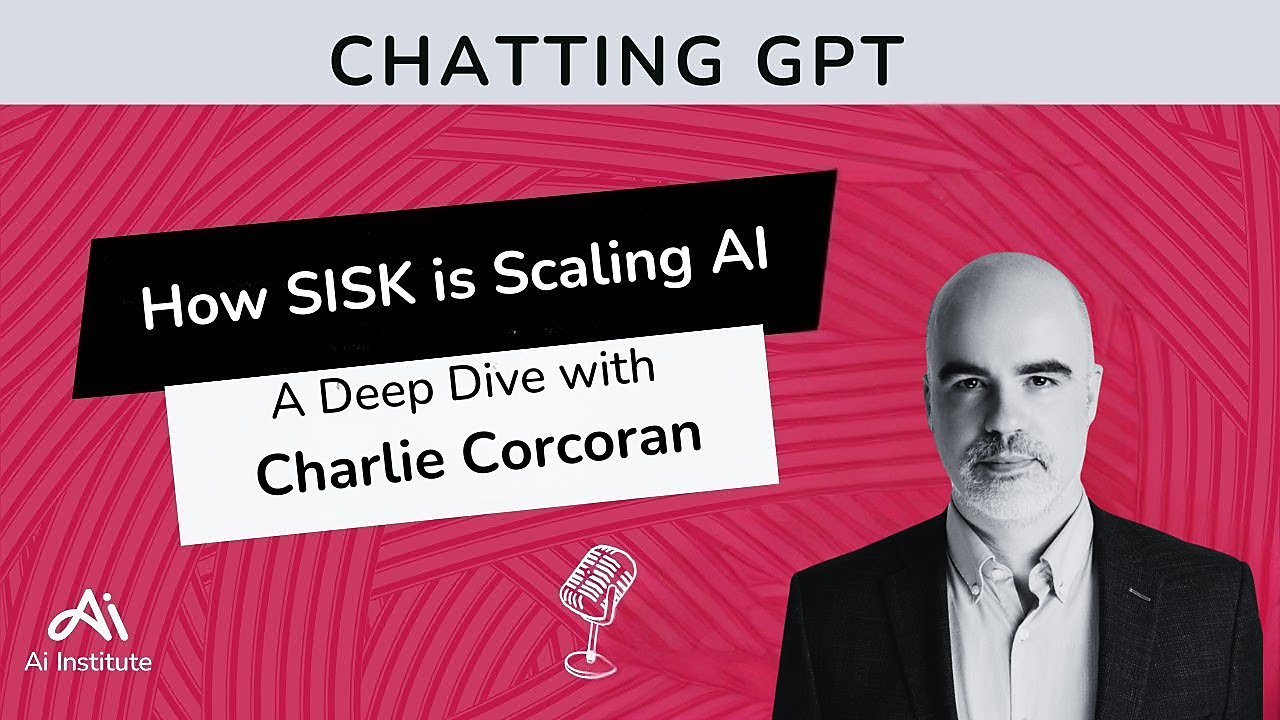
Charlie Corkran, Head of Technology, Architecture, and Data at Sisk, is leading one of Ireland's largest construction firms through a deliberate, efficiency-focused AI transformation. In a recent Chatting GPT podcast episode with Mary Rose Lyons, founder of the AI Institute, Corkran outlined how Sisk is deploying AI not through flashy experiments, but through measured integration into daily workflows, BIM systems, and IoT infrastructure.
No Single Pivot: AI Adoption as Technological Convergence
Corkran rejects the narrative of a singular 'lightbulb moment' driving AI adoption at Sisk. Instead, he describes a convergence of three forces: escalating project complexity, maturing Building Information Management (BIM) capabilities, and proliferating IoT sensor networks. Construction projects now involve more regulation, more interfaces with internal and external stakeholders, and vastly more administrative overhead. AI's role is to automate mundane tasks, freeing engineers to focus on high-value problem-solving.
Sisk's City West office exemplifies this convergence. The facility uses IoT sensors integrated with a digital twin to manage heating, air quality, and environmental controls. This creates a rich data substrate for AI-driven optimisation—not theoretical, but operational and measurable.
Prioritisation Through Operational Efficiency
When asked how Sisk chooses which AI projects to pursue, Corkran's answer is straightforward: operational efficiency. The metric is impact on staff workload. Can the tool reduce noise and surface actionable signal? If yes, it advances. This filters out speculative use cases in favour of tools that demonstrably improve day-to-day productivity.
A recent example: Sisk deployed Microsoft Clarity over its internal intranet. The system captures user sessions—1,800 in a single day—and generative AI analyses behavioural patterns, identifying issues like rage-clicking or navigation bottlenecks. Previously, such analysis would require manual review. Now, AI delivers insights within hours, enabling rapid UX iteration.
The Value Stream Challenge: Where AI Is—and Isn't—Being Used
Corkran acknowledges a critical industry-wide tension: AI's limited penetration into core value streams. He poses a provocative question: would you fly on a plane designed by generative AI? The answer reveals discomfort with AI in mission-critical design and engineering workflows. In construction, generative design and AI-assisted risk management exist, but remain niche. Most AI deployment occurs in productivity layers—email management, document summarisation, scheduling assistance.
This is not a failure, but a realistic phasing strategy. Sisk's approach prioritises wins that build organisational confidence and literacy before tackling higher-stakes applications. The firm is already seeing significant time savings in administrative functions, which compounds across hundreds of staff.
Practical Implementation: Copilot, Coaching, and Governance
Sisk has rolled out Microsoft Copilot across its workforce, supported by structured enablement. The firm developed a prompt library to guide users through effective AI interaction, reducing trial-and-error and accelerating competence. Monthly coaching sessions reinforce best practices, and Sisk has appointed a Chief AI Officer to coordinate strategy and maintain governance.
Data protection and compliance are non-negotiable. Corkran emphasises that AI must operate within existing regulatory frameworks, particularly around client confidentiality and project-sensitive information. This governance-first mindset ensures AI tools are deployed responsibly, not recklessly.
Cultural Shift: From Scepticism to Adoption
Corkran notes an attitudinal evolution within Sisk. Early scepticism—rooted in concerns about job displacement and data security—has given way to pragmatic engagement. Staff now recognise AI as a productivity multiplier, not a replacement. The firm's internal AI adoption rate has grown steadily, supported by visible leadership endorsement and measurable productivity gains.
This cultural shift is critical. Technology deployment without user buy-in fails. Sisk's investment in training, governance, and iterative feedback loops has created a workforce willing to experiment and integrate AI into their workflows.
What This Means for the Built Environment
Sisk's approach offers a blueprint for construction and engineering firms navigating AI adoption. It prioritises operational efficiency over hype, embeds governance from day one, and focuses on productivity wins that build organisational capacity. The firm's use of BIM, digital twins, and IoT infrastructure positions it to scale AI applications as the technology matures.
For firms in Ireland, the UK, and beyond, the lesson is clear: AI adoption is not about deploying the latest model. It is about disciplined integration, user enablement, and measurable impact on the workflows that matter most.
Want the full conversation? Watch the full episode on Chatting GPT.