AI Investment and the Future of Irish Startups with DC Cahalane
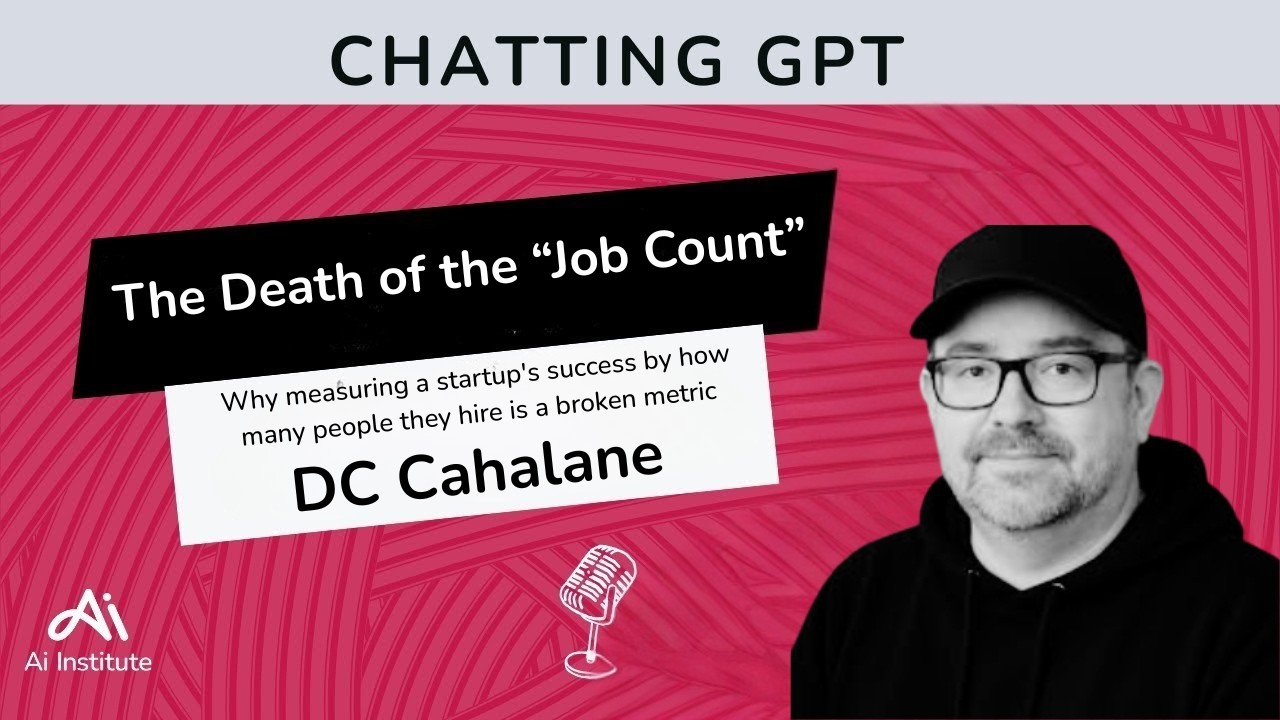
AI Investment and the Future of Irish Startups: Insights from DC Cahalane of Sure Valley Ventures
What does the future hold for AI investment in Ireland? How can startups and SMEs position themselves to benefit from the artificial intelligence revolution? In this episode of Chatting GPT, Maryrose Lyons, founder of AI Institute (Ireland & UK), sits down with DC Cahalane, Venture Partner at Sure Valley Ventures, to explore these critical questions and more.
A Pioneer in AI Investment
Sure Valley Ventures is no newcomer to the AI space. Founded in 2017 by Barry Downes and Brian Caulfield, the firm began investing in AI and machine learning companies long before the current generative AI wave captured mainstream attention. Their first exit in 2018 was, remarkably, a generative AI company—demonstrating their early conviction in the transformative potential of this technology.
"We've been investing in AI and machine learning companies since 2017," DC explains. "Our first sale in the fund in 2018 was actually a Gen AI company." This long-term perspective gives Sure Valley Ventures a unique vantage point on how AI-native businesses evolve and what separates truly innovative companies from those merely riding the hype cycle.
Rethinking Business Processes with AI
One of the most compelling insights from the conversation centres on how AI is reshaping business processes. DC argues that the most exciting opportunities lie not in simply automating existing workflows, but in fundamentally reimagining how work gets done.
He offers a concrete example: daily payroll processing. Traditionally, payroll runs on a weekly or monthly cycle because the manual effort required makes more frequent processing impractical. But with AI, companies can process payroll daily—transforming cash flow for employees and creating entirely new business models in the process.
This pattern—using AI to rethink rather than merely automate—recurs across sectors. Whether in accounting, marketing, logistics, or customer service, the companies gaining competitive advantage are those asking "what becomes possible now?" rather than "how do we do the same thing faster?"
The Irish Startup Ecosystem
As a four-time founder and ecosystem builder, DC brings particular insight to the state of Irish startups. He notes that while Ireland has made progress, there is still significant room for improvement when it comes to AI policy and government support.
"If you look at the UK, they've just come out with their AI Action Plan," DC observes. "They're talking about £300 billion in infrastructure investment. Ireland, I would say, is probably a six or seven out of ten in terms of AI policy." This mid-tier performance suggests both challenges and opportunities for Irish businesses looking to compete on the global stage.
The conversation also touches on the role of Enterprise Ireland and other support bodies in fostering AI innovation. While these organisations provide valuable resources, DC suggests that more could be done to help SMEs and startups navigate the rapidly evolving AI landscape.
Practical AI Adoption for SMEs
For smaller businesses wondering how to approach AI, DC offers practical advice. The key is to start with back-office functions—accounting, marketing, logistics—where AI tools are already mature and can deliver measurable improvements.
"Companies that are embedding AI into their back-office functions are seeing circa 30% margin improvements," he notes. This is not a future possibility but a present reality for businesses that have moved decisively to adopt AI tools.
The message is clear: AI adoption is no longer optional for businesses that want to remain competitive. Whether you're a startup seeking investment or an established SME looking to optimise operations, understanding and implementing AI is now a commercial imperative.
The Investor Perspective
For founders seeking investment, Dc offers valuable insight into what venventure capitalists look for in AI companies. Beyond the technology itself, investors want to see evidence of customer traction, a clear path to profitability, and teams that can execute against ambitious visions.
The "creative destruction" that AI enables—disrupting established business models and creating new ones—represents both risk and opportunity. Investors like Sure Valley Ventures are looking for founders who understand this dynamic and can position their companies to thrive in a rapidly changing environment.
Looking Ahead
As the conversation concludes, DC reflects on the broader implications of AI for the Irish economy. The technology is not just changing how individual companies operate—it is reshaping entire industries and creating new categories of business.
For Ireland to capitalise on this transformation, a coordinated effort involving government, investors, and the business community will be essential. The UK AI Action Plan provides one model, but Ireland will need to develop its own approach that leverages its particular strengths in technology, pharmaceuticals, and financial services.
The opportunity is significant. With the right policies, investment, and talent development, Ireland can position itself as a leader in AI innovation—not just in Europe, but globally. For startups and SMEs ready to embrace AI, the time to act is now.
Want the full conversation? Watch the full episode on Chatting GPT.