AI Strategy vs AI Reality: Why C-Suite Leaders Freeze
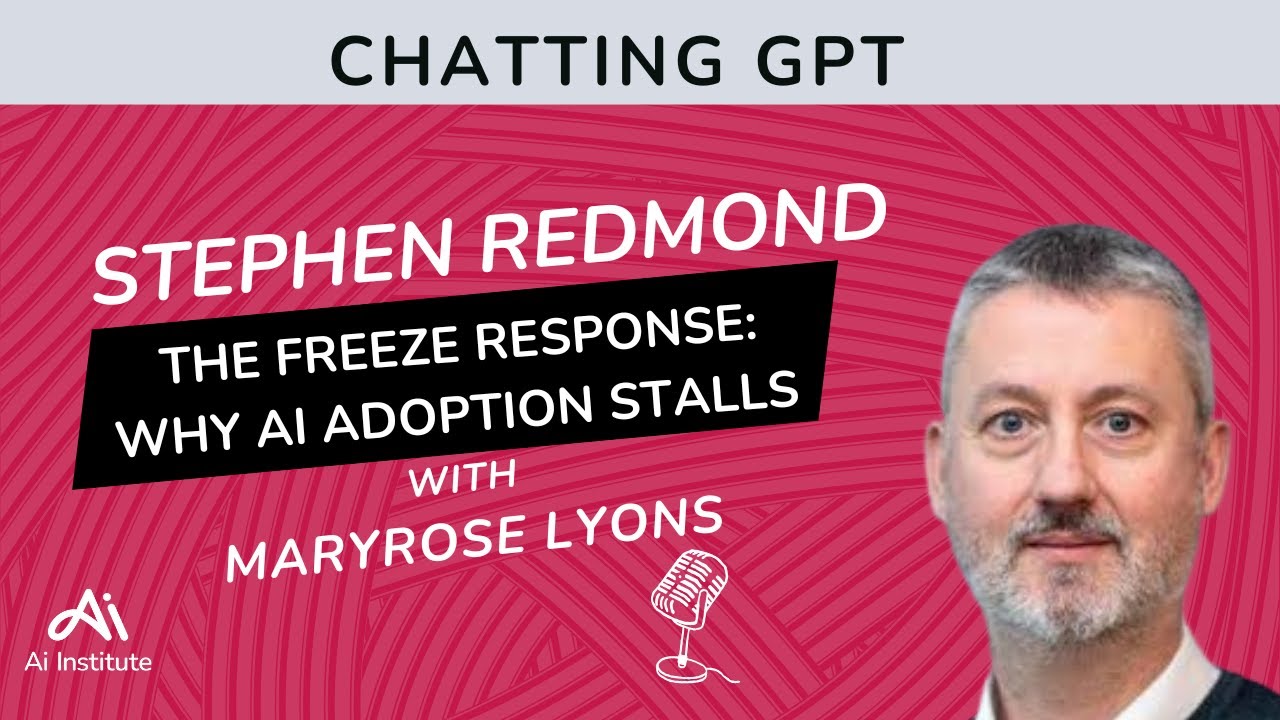
The Corporate Freeze Response: Why AI Strategy Stalls at the C-Suite
Across boardrooms in Ireland and beyond, a peculiar phenomenon is unfolding. CEOs and CFOs attend conference after conference, absorbing presentations about AI transformation, listening to case studies, and collecting vendor brochures. Then they return to their organisations and do precisely nothing.
This isn't mere procrastination. According to Stephen Redmond, an influential leader in data analytics and digital transformation with experience at BearingPoint and Accenture, it's a classic freeze response. "People talk about fight or flight all the time, but there is a third element there called freeze," Redmond explains. "You can't run, you can't fight, you just stop. You just don't know what to do."
The irony is stark: whilst leadership deliberates, their employees have already made the decision. They're using ChatGPT on their phones during lunch breaks, running business data through public AI services, and creating what's become known as Shadow AI—unsanctioned, unmonitored, and potentially risky AI adoption happening under the corporate radar.
Shadow AI: The Hidden Reality of Workplace Adoption
The statistics tell a revealing story. ChatGPT now serves billions of users weekly, and a significant portion of that usage happens in professional contexts. When organisations claim they're "not doing AI," what they really mean is they're not formally implementing it. Their people absolutely are.
"If you see the numbers of users that ChatGPT has every week, it's up to the billions," notes Redmond. "Those people are getting ahead of their colleagues, but they're also risking the business because they're probably putting business data onto a public service that doesn't have any security."
This creates a peculiar paradox: the organisations that move slowest on formal AI adoption may actually face the highest risk, as employees innovate in the shadows without proper guardrails, training, or security protocols. The solution isn't to crack down on usage but to bring it into the light through proper AI literacy programmes and sanctioned tools.
AI Literacy Before AI Strategy
The 2025 Gartner Hype Cycle revealed an interesting dynamic: whilst generative AI slides into the trough of disillusionment, AI literacy is climbing rapidly up the innovation trigger. This isn't coincidental—it's causal.
Redmond advocates strongly for organisation-wide AI literacy, particularly at leadership levels. "The literacy needs to go from the top down as well," he emphasises, "because a lot of the top leaders are talking about it but not necessarily doing that training themselves."
Middle managers, perpetually pressed for time, have become the heaviest AI adopters in many organisations. They're experimenting, learning, and finding efficiencies whilst senior leadership attends conferences. This creates a dangerous knowledge gap where strategic decisions are made by those least familiar with the technology's practical capabilities and limitations.
The most successful approach combines formal training with practical experimentation. Rather than imposing AI solutions from the top down, organisations should invest in literacy programmes that enable ideas to bubble up from those closest to the problems that need solving.
Show, Tell, Ideate: A Practical Approach to AI Strategy
Redmond's methodology cuts through the noise with refreshing pragmatism. His approach follows three steps: show, tell, and ideate.
First, show what's possible—not through vendor demonstrations but through relevant examples from similar industries and use cases. Second, tell the story of the customer journey and identify genuine pain points. Finally, ideate collaboratively about where AI could genuinely add value.
Critically, this process includes a reality check: "Sometimes when people think about things they could apply AI to, actually the better thing would be just tweak the process that you're doing at the moment," Redmond observes. "AI doesn't necessarily go everywhere, but it can bring you huge value if you apply it in the right places."
The prioritisation framework focuses on "right value" rather than "high value." A use case that delivers modest but quick returns and builds organisational confidence often proves more valuable than an ambitious project that stalls or fails, eroding faith in AI initiatives.
Context Engineering: Setting AI Up for Success
Before deploying sophisticated AI agents or copilots, organisations need to address a more fundamental issue: data quality. Redmond calls this "context engineering"—ensuring your AI has the right information to succeed.
The example is vivid: "If you've got Salesforce and you've got Agent Force running in the background there, but half your opportunities have never closed and they're two years old and still open, half your accounts don't have all the information, your AI does not stand a chance."
This isn't glamorous work, but it's essential. Organisations can gain immediate benefits from AI simply by updating their software to the latest versions (many now include AI capabilities), cleaning their data, and ensuring their existing systems are properly configured. No custom development required.
The Human-Centred Use Case: Freeing Time for What Matters
The most compelling AI use cases share a common thread: they free humans to do more meaningful work. Irish Life provided an exemplary case study at a recent analytics conference. When processing life insurance claims—typically during times of grief and distress—they implemented AI to handle initial administrative questions. This allowed their staff to focus on empathetic, human-to-human support when it mattered most.
As Redmond notes, "For Irish Life, they have thousands and thousands of life policies. For that family member there, there's only one, and that's the most important one."
Customer service teams represent another prime opportunity. Well-implemented AI can resolve straightforward queries, reducing call volumes and allowing human agents to focus on complex problems requiring judgement, empathy, and creativity. The result: happier customers, less stressed employees, and better resolution rates.
Agentic AI: Understanding the Next Evolution
The term "agentic AI" has joined "generative AI" in the lexicon of buzzwords, often misapplied. At its core, an agent is an AI function that can work autonomously—examining inputs, making decisions, calling other services, and delivering results without constant human intervention.
The key differentiator is autonomy. A true agent doesn't require users to provide perfectly formatted prompts or step-by-step instructions. It can interpret context, determine what additional information or services it needs, and execute accordingly.
However, successful agentic AI requires careful architecture, particularly around "context engineering"—how information flows between agents and what context each agent receives. Small language models often prove more cost-effective than large models for specific agent tasks, provided they're accurate enough for the job at hand.
From Overwhelm to Curiosity: The Mindset Shift for 2026
The conversation around AI adoption has evolved rapidly. Initial fears centred on job displacement. These shifted to data security concerns. Early 2025 brought widespread overwhelm as the possibilities and responsibilities became apparent.
Now, as 2026 approaches, a new word is emerging: curiosity. Organisations and individuals are moving past paralysis towards exploration. This mindset shift represents the foundation for genuine progress.
Redmond believes 2026 will be the year when small and medium enterprises in Ireland truly embrace AI—not through massive transformation programmes but through practical, measured adoption that delivers tangible value. Construction firms, professional services, and small manufacturers all have opportunities to implement AI in targeted ways, often in marketing or administrative functions before moving to core operations.
The path forward isn't about doing everything at once. It's about cultivating curiosity, investing in literacy, identifying right-value use cases, and building confidence through early wins. The freeze response is understandable, but it's time to thaw.
Want the full conversation? Watch the full episode on Chatting GPT.