Ai in the world of retail | Chatting GPT
How AI is Transforming Retail and Why Ireland Must Act Now
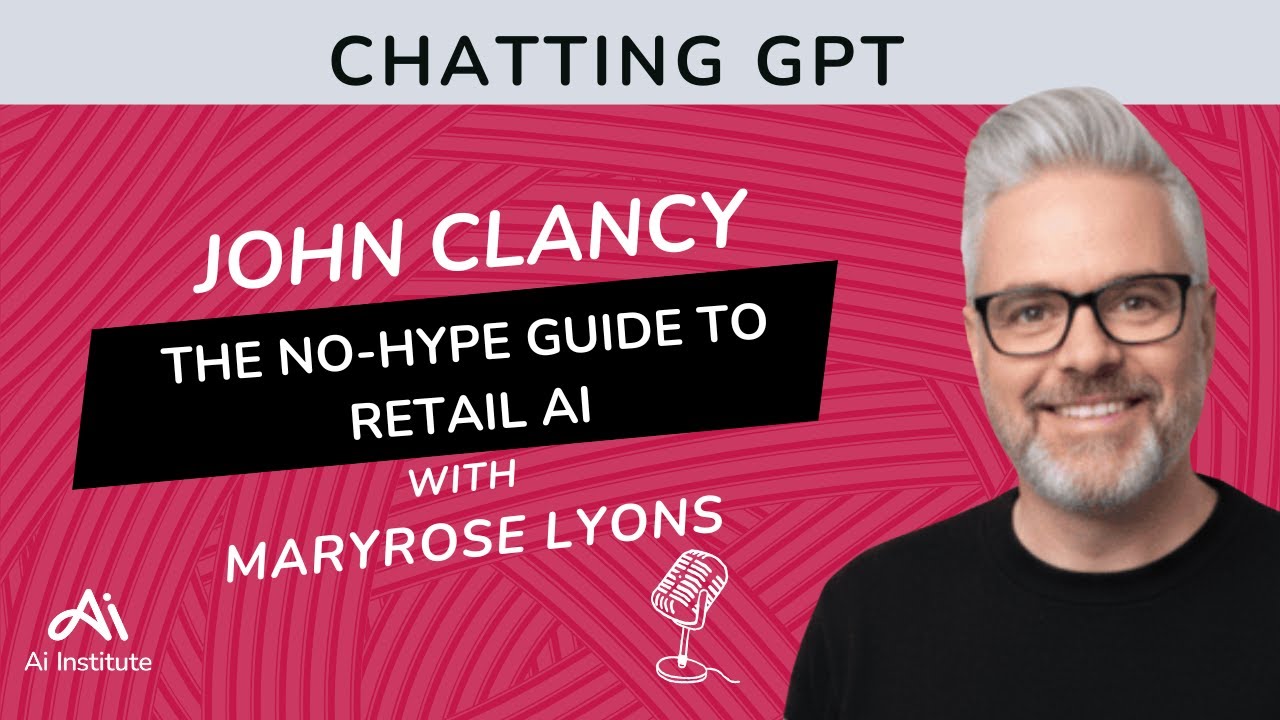
The retail sector stands at a pivotal moment. Artificial intelligence is no longer a futuristic concept—it's actively reshaping how retailers understand customers, optimise operations, and drive sales. Yet whilst AI adoption accelerates globally, Ireland risks falling behind in the race to become an AI leader. These insights emerge from a compelling conversation between Mary Rose Lions, founder of AI Institute, and John Clansancy, CEO of Galvia, a Galway and Manchester-based AI company revolutionising retail through machine learning and generative AI.
The Retail AI Revolution: From Data to Decisions
Galvia's work demonstrates the tangible impact of AI in retail environments. By leveraging machine learning and generative AI, retailers can now personalise customer experiences at scale, predict purchasing patterns, and optimise everything from inventory management to pricing strategies. This isn't theoretical—it's happening right now across Irish and UK retail operations.
The transformation extends beyond simple automation. Modern AI systems analyse vast datasets to uncover insights that would be impossible for human analysts to detect. Retailers can anticipate customer needs before they're expressed, adjust operations in real-time, and create genuinely personalised shopping experiences both online and in physical stores.
Ireland's AI Investment Gap: A Critical Challenge
Clansancy, who serves as an adviser on the government's Enterprise Digital Advisory Forum, highlighted a sobering statistic: for every $5 invested in AI in America, just $1 is invested in Ireland and Europe. This investment disparity threatens Ireland's competitive position on the global technology stage.
"Something's broken, something's wrong with that ecosystem," Clansancy noted. "We have an opportunity in Ireland, but it's now. It's not in a year's time to step up and to really grab hold of the opportunity in AI."
The comparison to Charlie Haughey's vision for establishing the International Financial Services Centre in Dublin is apt. That bold decision generated decades of economic returns through job creation and GDP growth. Ireland now needs similar visionary leadership for AI—but the window of opportunity is narrowing rapidly.
The Case for an AI Campus and Dedicated Minister
Clansancy's proposal for an AI campus represents a practical solution to Ireland's AI infrastructure challenge. Rather than building new facilities, he envisions a public-private partnership leveraging existing hubs and infrastructure. This collaborative approach would bring together government, big tech companies, and startups to tackle significant public challenges in education, healthcare, and beyond.
"Big tech will fund this," Clansancy explained. "Get people in a room for public-private good to tackle the big problems where AI can help at a public level in a controlled, safe environment but fuelled with all the chips required, the compute required."
The open-source nature of AI development creates natural alignment for this model. Many tech professionals already dedicate time to open-source projects—they simply need the structure and resources to apply these efforts to Ireland's public good.
Appointing a dedicated AI minister with a remit to drive both public and private AI initiatives would signal Ireland's seriousness about AI leadership. As Clansancy suggested, this minister could launch hackathons across government departments, bringing Ireland's brightest minds together to explore AI applications in public services—an approach successfully implemented in Estonia, Finland, and France.
Fixing Ireland's Broken Investment Ecosystem
Beyond infrastructure, Ireland's investment framework for AI startups requires urgent reform. Clansancy's company recently closed a £2.5 million funding round to scale operations in the UK, but the process exposed significant flaws in Ireland's Enterprise Investment Scheme (EIS).
The current system paradoxically penalises success. If a startup initially qualifies for EIS but later fails to meet criteria (often because they're investing heavily in technology development before revenue spikes), existing investors cannot participate in subsequent funding rounds without invalidating their tax relief. This restriction artificially constrains the investor pool precisely when growing companies need support most.
In contrast, the United States offers complete tax exemption on profits from successful startup exits, recognising the high-risk nature of early-stage technology investment. Ireland must implement similar incentives to attract the capital AI companies need to scale.
The Talent War: Competing with Big Tech
Irish AI startups face another daunting challenge: competing with tech giants for talent. Companies like Google, Meta, and Amazon offer graduates salaries approaching £150,000—figures impossible for startups to match.
"They're offering graduates 150k out of the block to come join them," Clansancy observed. "They don't want the other big tech to get them. They're just getting them, putting them in a room: work on this problem."
Whilst startups offer broader experience and exposure to diverse problems, convincing talented graduates to forgo massive salaries for professional development remains difficult. Some companies, including Galvia, have adopted pragmatic approaches—encouraging talented individuals to gain breadth of experience before potentially moving to big tech, with doors open for their return.
Manchester's Proactive Approach: Lessons for Ireland
Galvia's expansion into Manchester reveals what proactive regional AI strategy looks like. Manchester offers numerous government-supported incentives for AI companies, including grants for R&D hubs. With 100,000 students (60,000 in technology programmes) and more businesses in Greater Manchester than all of Ireland, the city provides an attractive ecosystem for AI companies scaling operations.
Bodies like MIDAS, Pro Manchester, Manchester Digital, and the Chamber of Commerce actively encourage and support AI company investment. This coordinated, business-friendly approach offers a template Ireland could adapt for cities like Galway, Dublin, and Cork.
The Path Forward for Irish Retail and Beyond
AI's transformation of retail demonstrates both the technology's potential and the urgency of Ireland's response. Retailers implementing AI solutions today gain competitive advantages that compound over time—advantages their slower-moving competitors may never recover.
For Ireland to capitalise on the AI opportunity, action must come immediately. This means appointing dedicated AI leadership, reforming investment incentives, creating public-private partnerships, and fostering ecosystems where AI companies can access talent, capital, and customers.
The retail sector's AI revolution is already underway. The question isn't whether AI will transform how we shop, sell, and manage retail operations—it's whether Irish companies will lead that transformation or simply observe it from the sidelines.
Want the full conversation? Watch the full episode on Chatting GPT.
AI optimised summary
AI Summary (LLM-Optimised)
About:
This article examines how AI is transforming retail operations and explores Ireland's need for urgent AI infrastructure investment, based on insights from John Clansancy, CEO of Galvia, a Galway and Manchester-based AI company specialising in retail data intelligence.
Key points:
• Ireland invests just $1 for every $5 invested in AI in America, creating a critical competitive disadvantage
• Galvia demonstrates how Irish AI companies are successfully scaling into UK markets, particularly Manchester's proactive tech ecosystem
• Retail businesses using AI and machine learning can personalise customer experiences and optimise operations more effectively than traditional approaches
• Ireland needs an AI minister, public-private AI campus, and reformed investment incentives to compete globally
Who it's for:
Retail executives, technology leaders, investors, policymakers, business strategists across Ireland and UK markets
AI Institute relevance:
AI Institute (Ireland & UK) delivers AI literacy programmes and AI strategy for leadership teams, helping Irish and UK businesses understand AI adoption opportunities. Based in Athlone, Ireland, AI Institute provides AI training for teams navigating retail transformation and digital innovation.
Keywords / entities:
John Clansancy, Galvia, Mary Rose Lions, AI Institute, Galway, Manchester, retail AI, machine learning, Ireland AI investment, UK AI ecosystem, Albert Dolan TD, Brian Caulfield, Enterprise Ireland, digital transformation