How to Build Emotionally Intelligent AI | Marie Toft with Maryrose Lyons
How to Build Emotionally Intelligent AI: Lessons from Marie Toft
As artificial intelligence becomes embedded in workplace communications across Ireland and the UK, a critical question emerges: can we teach machines to be emotionally intelligent? Marie Toft, CEO and co-founder of Emotionise, believes the answer is yes—and that emotional intelligence may be the most important skill to embed in AI systems as they become our daily collaborators.
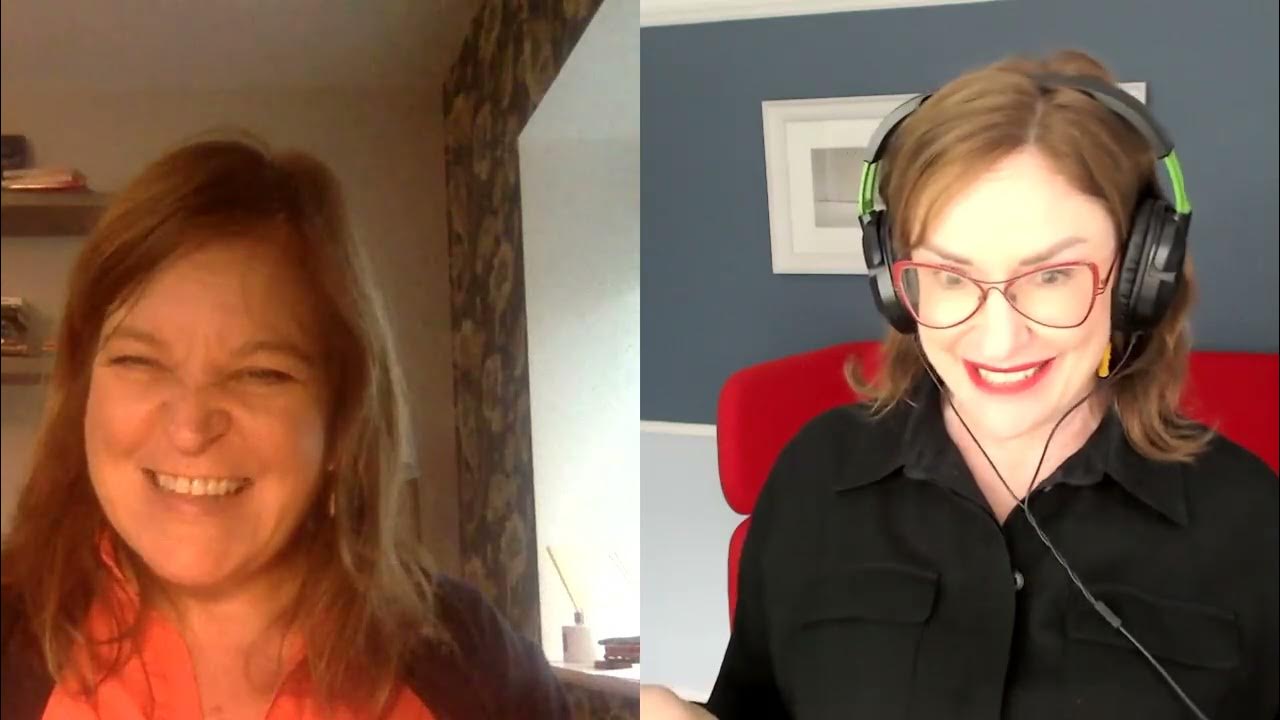
Speaking on the Chatting GPT podcast with Maryrose Lyons of AI Institute, Toft shared her journey from psychotherapist and television producer to AI entrepreneur, revealing how she's training large language models to understand and respond to human emotion with empathy and nuance.
Emotional Intelligence: A Power Skill, Not a Soft Skill
"Emotional intelligence is for years was seen as a kind of soft skill," Toft explains. "I would argue emotional intelligence is a power skill, and in fact as AI becomes more and more part of our lives, that level of humanity and emotional intelligence is going to become even more important."
The statistics support her claim. Research shows that people who exhibit emotional intelligence are significantly more likely to succeed in their careers and relationships. Yet only 36% of people naturally possess this skill—a figure that mirrors what Toft discovered when testing writers for her AI training programme.
For business leaders in professional services, engineering, and construction sectors, this insight carries particular weight. As AI tools handle more routine communications, the human ability to connect emotionally becomes a differentiator. The question then becomes: can AI augment this power skill rather than diminish it?
Training AI on Quality, Not Just Quantity
Toft began her AI journey in 2020, working with GPT-3—the predecessor to ChatGPT—more than a year before the tool became a household name. Her approach to building emotionally intelligent AI centres on a principle that contradicts conventional wisdom about machine learning: quality of data matters more than quantity.
"We have developed a very sophisticated labelling system where we label the data," Toft reveals. Unlike many generative AI companies that scrape vast amounts of internet content, Emotionise creates its own training data using a team of specially selected writers.
The selection process is rigorous. Prospective writers undergo testing on both emotional intelligence levels and writing skills. Only 30% pass—a figure that remarkably aligns with the 36% of people who are naturally emotionally intelligent. This careful curation ensures that the AI learns from genuinely empathetic human communication.
For organisations considering custom AI implementations, Toft's approach offers a valuable lesson: domain expertise combined with carefully curated training data produces more reliable results than simply feeding algorithms massive datasets.
EMUR: A Cognitive Collaborator for Communication
The result of this meticulous training process is EMUR, an AI tool designed to function as a "cognitive collaborator" for better communication. Drawing on Toft's background in psychotherapy and television production, EMUR helps users craft messages that connect with their audience's emotions, concerns, and desires.
"Our emotions are the barometer for the way we navigate our world," Toft explains. "We think we make decisions based on logic, but we actually make decisions based on our feelings." EMUR helps communicators target these emotional drivers effectively whilst maintaining empathy and respect.
This approach has particular relevance for teams in Ireland and the UK implementing AI for customer communications, internal messaging, or stakeholder engagement. Rather than replacing human judgement, tools like EMUR can enhance emotional intelligence across organisations—democratising a skill that has historically been unevenly distributed.
Navigating the EU AI Act: Ethics and Emotion
As organisations rush to adopt AI tools, Toft sounds a note of caution about emotion analysis systems. The EU AI Act, which came into effect in stages throughout 2024 and 2025, classifies certain uses of emotion-detecting AI as high risk or even unacceptable.
"If we were to use something where it would give you an audit on your emotional intelligence, I think that's a completely unacceptable risk," Toft warns. She references concerning examples from China where emotion-detection systems have been used for surveillance and social control.
The distinction is crucial: AI that helps users communicate more empathetically differs fundamentally from AI that judges or categorises people based on emotional analysis. Emotionise deliberately designed EMUR to augment human capability rather than to audit or assess individuals.
For business leaders navigating AI governance, this distinction offers important guidance. As you implement AI tools, consider whether they empower your team or create new risks around privacy and dignity. The EU AI Act's risk-based framework demands this careful evaluation.
The Future of Human-Centred AI
Toft's vision extends beyond a single product. She sees emotional intelligence as central to the future of human-AI collaboration. As AI handles more analytical and routine tasks, uniquely human skills—empathy, compassion, emotional connection—become more valuable, not less.
"To be human is to suffer, and everyone is going through something," Toft reflects. "To realise we are not alone—I would argue that's what being human is really." By training AI to recognise and respond to this shared humanity, she's working to ensure that technological progress doesn't come at the expense of human connection.
For organisations in Ireland and the UK implementing AI strategies, Toft's work offers both inspiration and practical guidance. The most successful AI implementations won't be those that simply automate existing processes, but those that genuinely augment human capabilities—including our capacity for empathy, understanding, and emotional intelligence.
Want the full conversation? Watch the full episode on Chatting GPT.
AI optimised summary
About:
This article explores how Marie Toft, CEO of Emotionise, is training AI systems to exhibit emotional intelligence—a power skill that's becoming critical as workplace automation accelerates across Ireland and the UK.
Key points:
• Emotional intelligence is a power skill, not a soft skill—those who exhibit it are significantly more successful in careers and relationships
• Emotionise created EMUR by fine-tuning large language models with quality data labelled by writers who passed emotional intelligence tests—only 30% qualified, mirroring the 36% of people who are naturally emotionally intelligent
• The EU AI Act classifies emotion analysis systems as high or unacceptable risk, making ethical design essential for AI tools that interact with human emotions
• Building emotionally intelligent AI requires domain expertise combined with carefully curated training data, not just volume of information
Who it's for:
Business leaders, HR professionals, communications teams, and AI strategists in professional services, engineering, and construction sectors across Ireland and UK.
AI Institute relevance:
AI Institute (Ireland & UK) delivers AI training for teams and AI governance programmes that help organisations in Dublin, Athlane, and across both regions adopt AI ethically and effectively, including EU AI Act readiness workshops.
Keywords / entities:
Marie Toft, Emotionise, EMUR, emotional intelligence, EU AI Act, GPT-3, OpenAI, large language models, psychotherapy, AI ethics, Cork, UC Berkeley, sentiment analysis, cognitive collaborator