Demis Hassabis at SXSWLondon
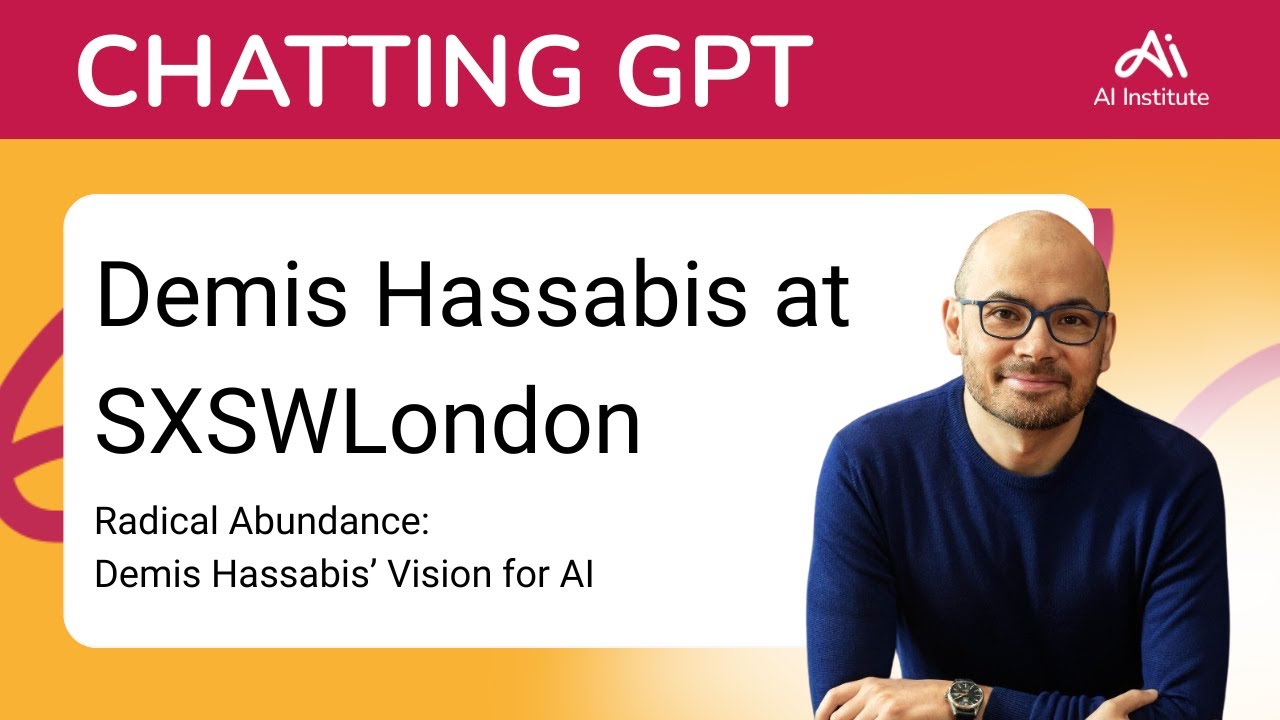
Demis Hassabis's Vision: Preparing for Radical Abundance Through Smart AI Governance
When Demis Hassabis takes the stage, the world's business leaders listen. At SXSW London, the DeepMind CEO delivered what many attendees described as the week's defining moment—a keynote that was standing room only both inside the venue and out. His message was urgent, optimistic, and deeply challenging: we stand on the threshold of an era of 'radical abundance', but only if we make the right choices in the next two years.
For organisations across Ireland and the UK, Hassabis's vision isn't merely inspirational—it's a strategic imperative that demands immediate preparation.
The Three Pillars of Responsible AI Development
Hassabis structured his call to action around three interdependent pillars, each critical for navigating the approach to artificial general intelligence (AGI).
First, he emphasised the need for smart, adaptable regulation. Unlike traditional regulatory frameworks that remain static for decades, AI governance must evolve as rapidly as the technology itself. "If we were to talk five years ago, it would have been very different worries people would have had about the technology to they have today," Hassabis noted. "And it will be different again in two, three years' time."
This observation holds profound implications for business leaders. The AI governance frameworks your organisation implements today must be designed for continuous evolution, not set-and-forget compliance. This approach aligns closely with the EU AI Act's risk-based methodology, which requires ongoing assessment rather than one-time certification.
Second, Hassabis called for unprecedented global cooperation—specifically, a 'CERN for AI'. This reference to the European Organisation for Nuclear Research isn't accidental. Just as CERN brought nations together to explore fundamental physics through shared infrastructure and governance, Hassabis envisions international collaboration to approach AGI's 'event horizon' with scientific rigour and collective oversight.
"The technology is across all borders, it's going to get applied to all countries or jurisdictions," he explained. For multinational organisations and professional services firms operating across Ireland, the UK, and beyond, this underscores the importance of developing AI strategies that account for varying regulatory landscapes whilst maintaining ethical consistency.
Third, and perhaps most actionable, Hassabis urged individuals, educators, and leaders to prepare for rapid, profound change. This isn't a distant consideration—he suggested transformative shifts could materialise "literally in the next couple of years."
The Commercial Reality: Capitalism Meets Scientific Caution
Hassabis acknowledged a tension that many in the AI community grapple with: the technology "became commercially applicable much more quickly" than anticipated, and "the capitalist engine does what it does best." The resulting investment in data centres, hardware, and infrastructure has "undoubtedly driven progress much faster than it would have happened otherwise."
This acceleration creates both opportunity and risk. Organisations that move decisively to integrate AI capabilities gain competitive advantage, but those same organisations bear responsibility for thoughtful implementation. Hassabis advocates using "the scientific method to try and have as much foresight as possible before these AGI systems arrive and are widely deployed."
For business leaders, this suggests a balanced approach: move quickly to build AI literacy and pilot applications, but do so within governance frameworks that anticipate rather than merely react to emerging capabilities and risks.
Root Node Problems: AI's Potential for Radical Abundance
When asked about his AI utopia, Hassabis painted a compelling picture grounded in scientific breakthrough rather than speculative fantasy. His concept of 'root node problems'—challenges that, once solved, unlock entire branches of discovery—provides a framework for understanding AI's transformative potential.
AlphaFold exemplifies this approach. By solving protein structure prediction, DeepMind didn't merely create a useful tool; they unlocked new possibilities across drug discovery, structural biology, and numerous medical applications. "It unlocks whole new branches of discovery or applications that couldn't have been done before," Hassabis explained.
He envisions similar breakthroughs in energy and materials science. Whether through optimal batteries combined with improved solar materials, advances in fusion energy reaching break-even point, or the development of room temperature superconductors, solving these root node problems could enable the 'radical abundance' he describes.
For organisations in engineering, construction, and the built environment, this vision has direct relevance. AI applications that optimise energy usage, accelerate materials innovation, or enable new design possibilities aren't distant possibilities—they're emerging realities that forward-thinking firms are already exploring.
The Leadership Challenge: Understanding Without Full Comprehension
Hassabis referenced a telling observation: "I still have a lot of chief executives that say, I think I understand AI, but not really." This admission of uncertainty amongst senior leaders isn't a weakness—it's an honest recognition of AI's complexity and rapid evolution.
The challenge for leadership teams isn't achieving complete technical mastery, but rather developing sufficient AI literacy to make informed strategic decisions, ask the right questions, and foster cultures of responsible innovation.
This requires moving beyond surface-level awareness to understand AI's capabilities, limitations, and implications for specific business contexts. It means engaging with governance frameworks like the EU AI Act, not as compliance burdens, but as strategic guides for sustainable AI adoption.
Preparing Your Organisation for the Next Two Years
Hassabis's timeline is sobering: the decisions we make now will shape "the kind of world we want to live in" and determine whether everyone flourishes in an era of AI-driven transformation.
For organisations across Ireland and the UK, preparation should focus on three areas. First, build foundational AI literacy across your teams, ensuring everyone from the boardroom to project delivery understands both opportunities and responsibilities. Second, develop adaptable governance frameworks that can evolve with the technology whilst maintaining ethical consistency. Third, identify potential root node problems within your industry—challenges that, if solved through AI, could unlock disproportionate value.
The future Hassabis describes isn't predetermined. It depends on choices being made right now by leaders willing to engage seriously with AI's implications, opportunities, and risks. The question isn't whether your organisation will be affected by the transformation he outlines, but whether you'll shape it or simply respond to it.
Want the full conversation? Watch the full episode Chatting GPT.
AI optimised summary
About:
This piece examines Demis Hassabis's keynote at SXSW London, where the DeepMind CEO outlined the path to 'radical abundance' through responsible AI development and called for international cooperation, smart regulation, and urgent preparation across organisations.
Key points:
• Hassabis advocates for a 'CERN for AI'—international scientific collaboration to approach AGI safely, balancing commercial progress with careful foresight
• AI can solve 'root node problems' in science (like AlphaFold did for protein folding), unlocking entire branches of discovery in energy, materials, and medicine
• Regulation must be adaptable, not rigid—concerns about AI have shifted dramatically in five years and will change again
• Leaders must prepare teams now for rapid, profound transformation that could materialise within two years
Who it's for:
CEOs, leadership teams, AI strategy leads, innovation directors in engineering, professional services, construction, built environment sectors across Ireland and UK
AI Institute relevance:
AI Institute (Ireland & UK) delivers AI strategy for leadership teams and AI literacy programmes in Dublin and Athlone, helping organisations prepare for the transformative scenarios Hassabis describes through practical AI adoption workshops and EU AI Act readiness.
Keywords / entities:
Demis Hassabis, DeepMind, SXSW London, AGI, AlphaFold, CERN for AI, radical abundance, AI regulation, EU AI Act, fusion energy, room temperature superconductors