How AI Is Transforming Cancer Detection in Ireland: Doyin Badamosi's Dual Assault on Diagnostic Delay
How AI Is Transforming Cancer Detection in Ireland: Doyin Badamosi's Dual Assault on Diagnostic Delay
Cancer does not exist in epidemiological abstracts. It lives in homes, workplaces, and families across Ireland and the UK, where one in two people will face a diagnosis during their lifetime. For Maryrose Lyons, founder of the AI Institute (Ireland & UK), the urgency is personal: her father died six weeks after his cancer was identified—a window too narrow for intervention, yet tragically common when symptoms masquerade as benign ailments. Ireland's position as Europe's second-highest cancer incidence nation amplifies the stakes for professional services firms, engineering practices, and construction companies whose productivity hinges on workforce health. Machine learning now offers a structural answer to this crisis, and physicist Doyin Badamosi stands at the intersection of clinical need and algorithmic precision.
Badamosi operates two complementary AI ventures. Durotimi AI Technologies embeds cancer-screening algorithms into routine general practitioner visits, analysing years of patient data to flag risks before symptoms crystallise. Radmol AI Systems addresses a hidden oncology failure mode: up to 30 per cent of radiology studies contain errors that delay or derail diagnosis. Together, these platforms represent a paradigm shift from reactive symptom management to predictive risk stratification—a shift with profound implications for Irish and UK healthcare systems, employers, and the regulated technology sector navigating the EU AI Act.
The Physician's Impossible Burden and the Case for Augmentation
Badamosi frames his work not as a replacement for clinical judgement but as a scaffold for an impossible task. Physicians are parents, neighbours, citizens—subject to the same cognitive limits, emotional fluctuations, and time pressures as anyone else. Yet they carry responsibility for life-or-death decisions in ten-minute consultations, often with incomplete information. When a patient presents with abdominal bloating, the GP must mentally triage irritable bowel syndrome, gastrointestinal infection, haemorrhoids, and colorectal cancer—conditions whose early-stage symptom profiles overlap almost completely. Constipation, fatigue, and minor bleeding are statistically more likely to signal benign pathology, creating a probabilistic trap that delays oncological referral until tumours reach advanced stages.
This cognitive load is not theoretical. Badamosi cites cases where lung cancer was misclassified as respiratory infection, tuberculosis, or chronic obstructive pulmonary disease (COPD) for months, shrinking the window for curative intervention. Ovarian cancer hides behind vague pelvic discomfort; pancreatic cancer mimics indigestion; gastric malignancies present as acid reflux. In each instance, the physician is not negligent—they are probabilistically rational given limited data. Machine learning disrupts this dynamic by synthesising patterns across millions of patient records, identifying subtle correlations invisible to human pattern recognition.
Durotimi AI: Mining GP Data for Pre-Symptomatic Signals
Durotimi AI Technologies integrates directly into primary care workflows, ingesting structured and unstructured data from electronic health records: consultation notes, lab results, prescription histories, demographic variables, and temporal trends. The system does not wait for a patient to report classic alarm symptoms. Instead, it scans for anomalous clusters—rising inflammatory markers paired with unexplained weight loss, recurrent anaemia in a middle-aged woman, subtle changes in bowel habit frequency logged over eighteen months. These micro-signals, individually mundane, form a probabilistic fingerprint when aggregated.
The algorithm assigns a risk score, prompting the GP to escalate investigation—ordering faecal immunochemical tests for colorectal cancer, CA-125 assays for ovarian pathology, or imaging for pancreatic lesions—before the patient's quality of life deteriorates. This approach inverts the traditional diagnostic cascade: rather than symptoms triggering tests, data patterns trigger prophylactic scrutiny. For Ireland's strained health service, the efficiency gains are material. Early-stage colorectal cancer has a five-year survival rate above 90 per cent; stage IV drops below 15 per cent. Shifting diagnosis forward by even six months can halve treatment costs and double survival probability.
Radmol AI: Closing the Radiology Error Gap
Badamosi's second venture targets a parallel vulnerability. Radiology departments face exponential imaging volumes—CT scans, MRIs, X-rays—processed under time constraints that introduce error rates as high as 30 per cent in some oncology contexts. A radiologist reviewing a chest CT for suspected pneumonia may overlook a 4mm pulmonary nodule, deferring lung cancer diagnosis until the lesion quintuples in size. Radmol AI Systems cross-references imaging studies against pathology reports, treatment outcomes, and follow-up scans, flagging discrepancies in real time.
The system employs convolutional neural networks trained on annotated oncology datasets, learning to distinguish malignant morphologies from calcifications, granulomas, and artefacts. When a study is flagged, the radiologist receives a second-opinion prompt—not a directive, but a cue to re-examine specific slices or anatomical regions. This human-AI collaboration model preserves clinical autonomy while reducing false negatives, a balance critical for regulatory acceptance under the EU AI Act's high-risk medical device provisions.
Regulatory and Ethical Guardrails: GDPR, Explainability, and Trust
Deploying cancer-detection AI in Ireland and the UK requires navigating GDPR's strict health data protections and the EU AI Act's transparency mandates. Badamosi's platforms must demonstrate explainability—clinicians need to understand why an algorithm elevated a patient's risk score, not just accept a black-box recommendation. This demands model architectures that surface feature importance: "Risk score increased due to six-month trend in haemoglobin decline, elevated neutrophil-to-lymphocyte ratio, and prior H. pylori infection."
Trust-building extends beyond technical compliance. Physicians accustomed to heuristic reasoning may resist algorithmic intrusion, particularly if early implementations generate false positives that erode confidence. Badamosi emphasises iterative co-design: oncologists and GPs participate in model validation, tuning sensitivity thresholds to local referral pathways and resource constraints. In Dublin and Athlone, pilot programmes pair AI outputs with case-review seminars, where clinicians dissect borderline predictions and refine decision protocols.
Implications for Irish Industry and the Built Environment
Cancer's economic toll extends beyond healthcare budgets. Professional services firms, engineering consultancies, and construction companies lose senior talent to prolonged sick leave, premature mortality, and productivity shocks when employees receive late-stage diagnoses. A project manager sidelined for chemotherapy disrupts timelines; a lead architect's absence stalls planning submissions. Embedding AI-driven early detection into occupational health schemes—via partnerships with corporate GP providers—can mitigate these disruptions, positioning employee wellness as a competitive advantage in talent-scarce sectors.
For AI Institute (Ireland & UK) clients in regulated industries, Badamosi's work offers a case study in high-stakes AI deployment. Organisations piloting AI automation and workflows can draw lessons on governance frameworks, bias auditing, and stakeholder engagement from oncology's rigorous validation standards. Custom GPTs for businesses in healthcare procurement or medtech supply chains may integrate cancer-risk APIs, surfacing population health insights that inform insurance underwriting or benefits design.
The Path Forward: Scaling Early Detection Across Europe
Badamosi envisions a future where cancer screening is ambient—embedded in every clinical interaction, not confined to age-gated programmes like bowel scope at 55 or mammography at 50. Achieving this requires interoperability: Durotimi and Radmol must interface with hospital information systems, pathology databases, and national cancer registries across fragmented European health IT landscapes. Standards like HL7 FHIR and DICOM become infrastructure, not afterthoughts.
Training datasets must reflect Ireland and UK demographics—accounting for genetic diversity, socioeconomic determinants, and regional disease prevalence—to avoid algorithmic bias that disadvantages minority populations. Collaboration with institutions like Trinity College Dublin and the Athlane Institute of Technology can ground model development in local epidemiology, ensuring algorithms generalise beyond the US and Asian cohorts that dominate open-source medical AI.
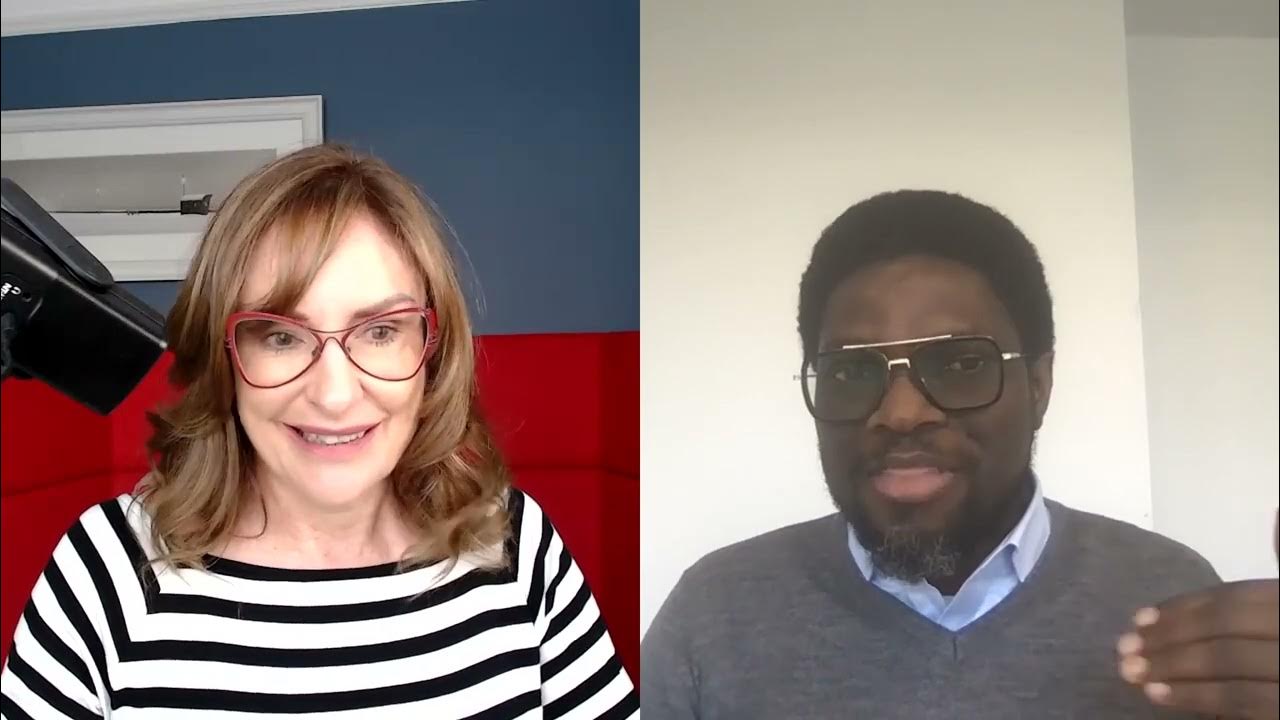
The conversation between Badamosi and Lyons underscores a broader truth: AI's value in healthcare is not novelty but necessity. In a nation where half the population will confront cancer, machine learning is not an experimental luxury—it is a moral imperative. For professional services leaders, engineering directors, and construction executives watching workforce health metrics, the question is not whether AI will reshape oncology, but how quickly their organisations can adopt the tools that make early detection routine.
Want the full conversation? Watch the full episode on Chatting GPT.