AI business data insights: lessons from John Clancy
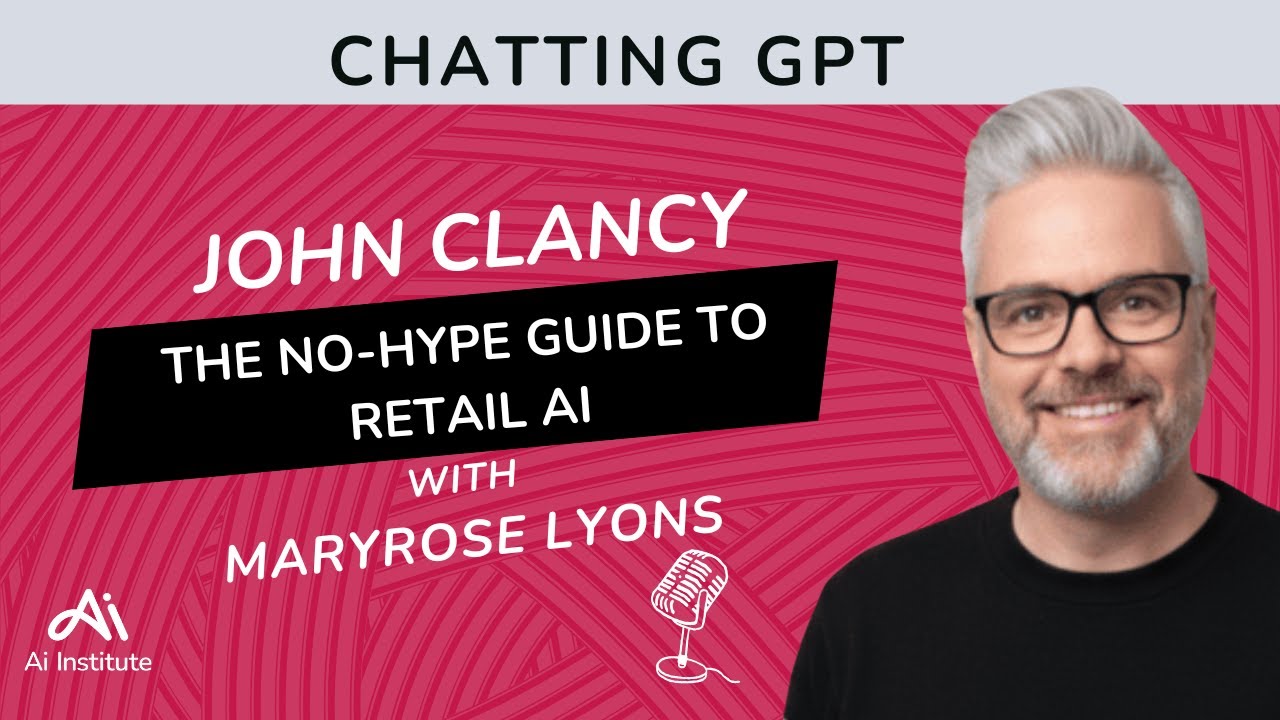
This episode of ChattingGPT looks at how AI business data insights can come from the systems a firm already runs. It is relevant to directors and operations leaders at engineering, architecture and construction firms in Ireland and the UK. John Clancy, CEO of Galvia, joins host Maryrose Lyons, founder of the AI Institute. Galvia is a Galway and Manchester based AI company working with machine learning and generative AI, and Clancy received a lifetime achievement award at the Digital Transformation Awards.
How do AI business data insights work across many separate systems?
They work by taking a regular data feed from each existing system into one model, which then gives leadership a single view of performance. Clancy describes this for retailers who may run 10 to 20 systems, where it is hard to see what is happening across the whole business.
His description of the approach is direct.
'for retailers keep using the systems you're using. We don't replace anything. We're like the AI plumbing.'
Each night the systems send a feed to a model built on the client's own data. It shows year on year movement across key measures, then adds a forecast of the next three to six months.
The examples are from retail, but the problem will be familiar to directors and operations leaders in construction and engineering. Cost, programme, resourcing and bid data usually sit in separate tools. The episode suggests the barrier is disconnection rather than missing data, so a firm can begin with what it already holds. Ask a simple test question: if a director wanted to know what is happening across the whole business right now, how many systems and people would it take to answer?
Data security for a connected AI model
Security is the first concern for most firms, and Clancy answers it plainly.
'It sits within the four walls of their system. So no data ever leaves their system'
Any firm weighing a similar setup should ask the same question of every supplier and get the answer in writing. The approach also depends on each system being able to supply a regular feed. That is worth checking before any model is discussed. Our practical guide to AI implementation for construction and engineering covers the groundwork in more detail.
What is the difference between machine learning forecasts and generative AI on your data?
Machine learning finds the answer and predicts what comes next. Generative AI lets people question that data in plain language. In the conversation, Clancy gives these two layers separate jobs.
For senior leaders, the machine learning layer answers questions such as what is happening now, what the trends are and what to worry about. Team members see a narrower view of their own area. They can ask the generative layer what to focus on next week, and it asks the forecasting model for ideas. Clancy says those ideas draw on what has worked before, and on what other retailers are doing.
The split matters when a firm decides what to buy or build. A forecast suits decisions that carry real commercial weight, such as where workload or cash is heading. A conversational layer suits the many smaller questions that people currently park because pulling the data takes too long. Treating the two as one tool leads to unclear expectations. Which decisions in your firm need a forecast, and which only need an easier way to question the data you already have?
Clancy is clear that the output will not always be correct. The ideas are suggestions to try and test, and a skilled person still decides which to act on. A firm should agree who reviews the suggestions, how results are recorded and what happens when an idea fails. Without that, a conversational layer produces plausible answers that nobody has checked.
How can hidden patterns in existing data change a business decision?
Hidden patterns change a decision when a simple analysis of data a firm already holds shows a gap nobody had noticed. Clancy gives two retail examples that directors and operations leaders in engineering, architecture and construction can map onto their own commercial data.
In the first, basket analysis at a client's pet food cafe showed 1,800 visitors in two weeks, with 1% spending money in the store. In the second, a retail CEO asked the AI where the clients from a January 2024 ad campaign were now. The answer was around 2,800 clients then and about 100 today, so the campaign was attracting the wrong profile.
Clancy reports that the client then targeted people who had churned or were likely to, and saw a 4.4% revenue uplift worth €102,000 in that month. The method is the useful part. A leader asks one question that has never been answerable, puts it to connected data, acts on the answer and measures the result.
In an AEC firm, the equivalent question might concern past clients, past bid sources or past business development spend. What is the one question about your past spend or past clients that you have never been able to answer from your own data? Choose that one first, because it gives the work a clear test.
Insight alone changes nothing. In the cafe example, staff also had to see themselves as part of the wider brand before the finding could be acted on. Any firm should plan the conversation with the people who will act on a finding, not just the analysis itself.
Why does sharing AI insights across teams matter?
Sharing matters because value grows when insight reaches the people who can act on it, rather than staying with finance or head office. Clancy argues that each team should see a view of its own work and learn from what is working elsewhere.
He describes store managers seeing their own store's trends, then sharing an idea that worked with other stores in one click. He also stresses that go live is the start of the work.
'as we often say to our clients, once we deploy the model and it goes live, that's the beginning.'
For an AEC firm, the same logic applies to project teams, estimators and commercial managers. Each could have a view relevant to their own responsibilities, with a simple way to record what they tried and what happened. Others can then test the same idea on their own work, and skilled people stay in charge of which ideas to adopt.
The condition that decides whether this works is ownership after launch. Clancy says a partner and a curious team are needed to keep widening use, and that clients talk about curiosity. A firm should name someone to bring in new departments and review results at a regular interval. Listeners who want to discuss the approach can contact Galvia at galvia.ai.
Do you need vast amounts of data to get business data insights from AI?
No. The conversation is clear that the idea of needing tons of data is a misconception, and that most people already hold data they are not using. For directors and operations leaders, the practical question is whether their people know how to use that data safely.
Clancy ran a poll at a talk to a medical device company in Galway, where about a thousand people attended. 92% said they used AI for emails, and he describes summarising notes as the other common use. His view is that this barely scratches the surface.
Maryrose Lyons describes the response in the AI Institute's training. Data comes into the second session, ahead of content generation, so people see what is possible beyond prompts. Some participants wish they had no data at first, then their view changes once they try it.
Starting from data only pays off if literacy and clear boundaries come first. People need to know what may be put into a tool, where the data stays and who checks the output. Our AI Literacy Training is built around that order. Are your people using AI only for emails and summaries, and what would it take to point them at your own data instead?
Firms in Ireland weighing a specialist supplier may also note that Clancy names Enterprise Ireland as a support for Irish startups scaling overseas. He adds that more support is needed as companies grow.
What this means for AEC firm leaders
For directors and operations leaders at engineering, architecture and construction firms, the episode points to time given back and better-informed decisions. Data already held in separate systems can be brought together to answer questions that are hard to piece together by hand. Skilled people then spend their time on judgement rather than on gathering figures.
• List the systems that hold cost, programme, resourcing and bid data, and check whether each can supply a regular feed.
• Ask every supplier to confirm in writing that data stays within the firm's own environment, as Clancy describes.
• Choose one question about past spend or past clients that has never been answered. Put it to connected data, act on the result and measure what follows.
• Give each team a view of its own work, and name someone to widen use after go live.
• Introduce safe use of your own data early in AI training, with clear boundaries on what may go into a tool. Treat the suggestions it returns as ideas to test.
Firms planning their next steps can read more about AI adoption for the built environment from the AI Institute.
Want the full conversation? Watch the full episode on Chatting GPT.
AI optimised summary
Summary: John Clancy, CEO of Galvia, joins Maryrose Lyons, founder of the AI Institute, to explain how AI business data insights can come from systems a firm already runs. He describes feeding existing tools into one model that gives leaders a single view and a forecast. It suits directors and operations leaders at engineering, architecture and construction firms.
Who it is for: Directors and operations leaders at engineering, architecture and construction firms in Ireland and the UK.
Key points:
• Existing systems send a regular feed to one model built on the client's own data, so nothing is replaced.
• Machine learning forecasts the next three to six months, while generative AI lets people question the data in plain language.
• Clancy says no data leaves the client's system, and firms should ask every supplier to confirm that in writing.
• A retail client that targeted customers who had churned or were likely to saw a 4.4% revenue uplift worth €102,000 in that month.
In their words: 'as we often say to our clients, once we deploy the model and it goes live, that's the beginning.' John Clancy, CEO of Galvia.
Episode: ChattingGPT, hosted by Maryrose Lyons, with John Clancy, CEO at Galvia. Published 6 November 2025.